
This guide contains affiliate links to BEWIT.love. If you buy through them, we may earn a commission at no extra cost to you. This never affects what we write.
In this guide
A natural skincare routine doesn't need twelve products and a chemistry degree. It needs four well-chosen steps, a facial oil matched to your skin type, and the discipline to dilute properly. This guide walks you through building a complete facial oils routine from scratch — including where modern antioxidant ingredients like C60 fit in.
Start with Your Skin Type
Every good routine begins with an honest look in the mirror. Wash your face with a gentle cleanser, apply nothing, and wait an hour. What you see tells you which of the four classic skin types you're working with:
- Dry: Skin feels tight, may look dull or flaky. It lacks oil (sebum) and often water too. Dry skin loves rich carrier oils and occlusive final steps.
- Oily: Visible shine across the whole face within an hour, enlarged-looking pores. Counterintuitively, oily skin still benefits from facial oils — the right lightweight ones can help it feel balanced rather than stripped.
- Combination: Shine in the T-zone (forehead, nose, chin), normal or tight cheeks. Most people land here. You may end up using two different oils on two different zones.
- Sensitive: Skin that flushes, stings, or reacts easily to new products. Sensitivity overlays any of the other three types and calls for minimal ingredient lists and extra-careful patch testing.
Your skin type isn't fixed for life. Seasons, stress, and age all shift it, so re-check once or twice a year and adjust your oils accordingly.
The 4-Step Natural Routine
Strip away marketing and every effective routine reduces to the same four verbs: cleanse, tone, treat, moisturize. Here is what each step actually does and how to do it with natural products.
Step 1: Cleanse
Cleansing removes sunscreen, sebum, and the day's grime so everything that follows can reach your skin. Natural options include oil cleansing (massaging a light carrier oil such as jojoba into dry skin, then removing it with a warm, damp cloth) or a mild, low-foam cleanser with a short ingredient list. In the morning, lukewarm water or a single gentle pass is usually enough — over-cleansing is one of the fastest ways to leave any skin type feeling tight and reactive.
Step 2: Tone
A toner's job in a natural routine is simple: rebalance and lightly rehydrate skin after cleansing. Floral waters (hydrosols) are perfect here — rose water for normal to dry skin, witch hazel or neroli water for oilier types, chamomile water for sensitive skin. Mist onto the face or press in with clean hands while skin is still slightly damp. Skip anything with a high alcohol content.
Step 3: Treat
The treatment step delivers concentrated actives to damp skin: a facial serum, an antioxidant product, or your diluted essential-oil blend. Because this layer sits closest to the skin for the longest time, it's where quality matters most — and where ingredients like C60 (more on that below) typically appear. Apply a few drops, press gently into the face and neck, and give it a minute to settle.
Step 4: Moisturize and Seal
The final step locks in everything underneath. Dry and normal skin does well with a cream followed by 2–3 drops of facial oil pressed on top as a seal; oily skin may prefer a light lotion or the facial oil alone. A hydrating cream such as BEWIT's hyaluron cream pairs water-binding hyaluronic acid with the oil layer above it — humectant underneath, oil on top is the classic natural combination for lasting comfort.
AM vs. PM at a Glance
Morning: rinse or gentle cleanse → hydrosol toner →
antioxidant serum → light moisturizer → sunscreen (non-negotiable, even
in a natural routine).
Evening: oil cleanse or gentle cleanser → toner →
treatment serum or essential-oil blend → cream sealed with facial oil.
Choosing Facial Oils by Skin Type
A facial oil has two parts: the carrier oil, which makes up 99% or more of the blend and does most of the work, and the essential oil, added at a very low 0.5–1% for scent and skin-loving plant compounds. If carrier oils are new territory, our complete carrier oils guide covers each one in depth. As a starting point:
| Skin Type | Carrier Oil | Essential Oil (0.5–1%) | Better to Avoid |
|---|---|---|---|
| Dry | Avocado, sweet almond, rosehip | Lavender, frankincense, sandalwood | Drying alcohols; strong citrus oils |
| Oily | Jojoba, grapeseed, hemp seed | Tea tree, geranium, petitgrain | Coconut oil and other heavy, pore-clogging butters |
| Combination | Jojoba, apricot kernel | Lavender, geranium, frankincense | One heavy oil over the whole face — zone instead |
| Sensitive | Jojoba, oat oil, calendula-infused oil | Roman chamomile at 0.5% max — or none at all | Cinnamon, clove, oregano, lemongrass, unbuffered citrus |
In practice, 1% means roughly 3 drops of essential oil per 15 ml (one tablespoon) of carrier; 0.5% means 1–2 drops. Frankincense deserves a special mention for mature and dry skin — its reputation in skincare goes back millennia, and we've covered why in our frankincense benefits guide.
What Is C60 in Cosmetics?
C60, or fullerene, is a molecule of sixty carbon atoms arranged in a football-shaped sphere. In cosmetics it's used as an antioxidant ingredient — its cage-like structure can interact with free radicals, which is why it has attracted attention in skincare formulation over the past decade. In a routine, C60 products slot naturally into the treatment step, where antioxidants traditionally live.
It's worth being clear about what C60 in a cream is and isn't: it's an interesting, well-studied antioxidant ingredient, not a miracle. If you want the deeper background on the molecule itself, our article on C60 and its properties goes into the science and history.
Where the BEWIT C60 Line Fits
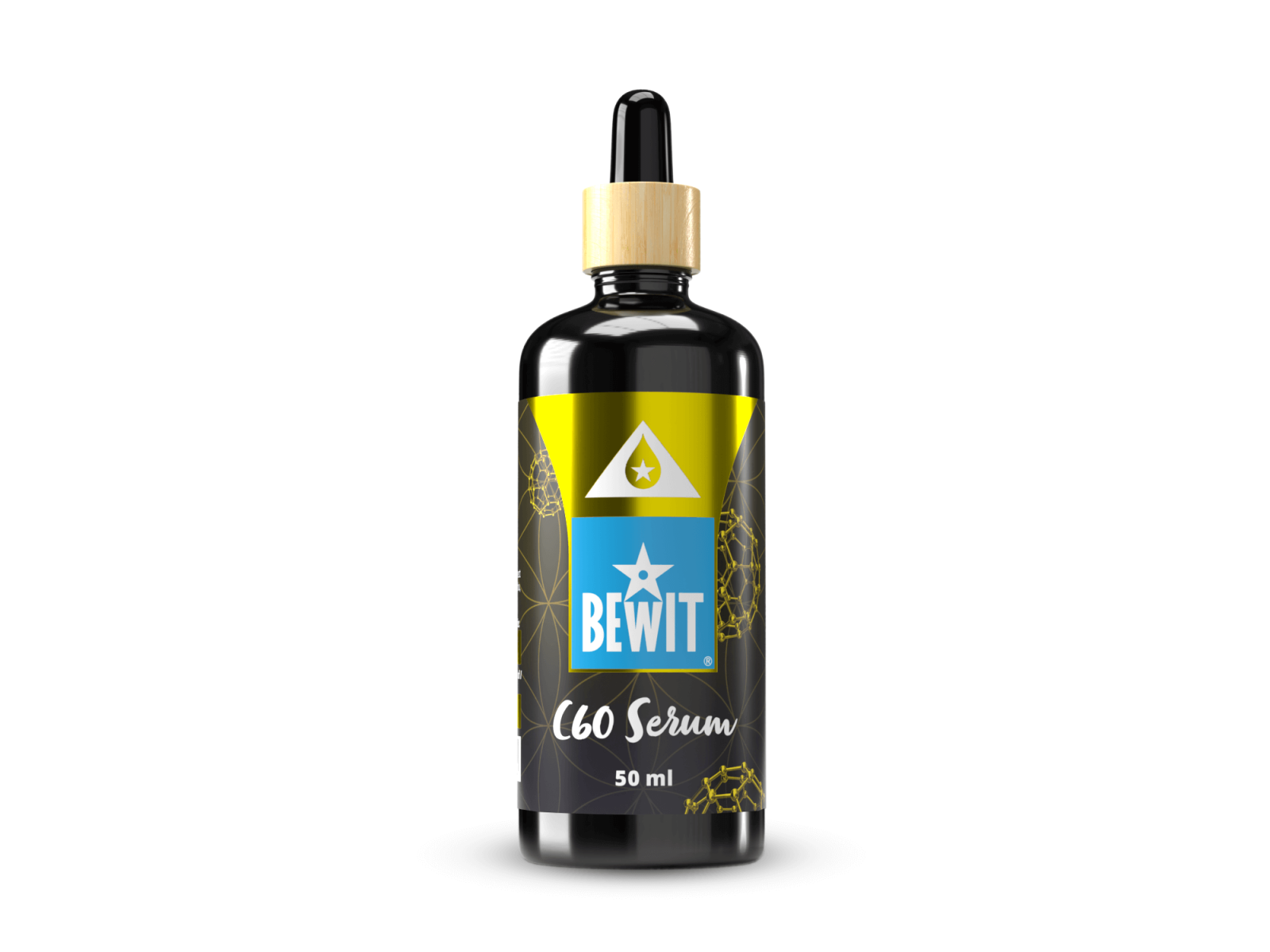
BEWIT builds C60 into a small line of facial cosmetics. The BEWIT C60 serum is a treatment-step product — a few drops on damp skin after toning, before your moisturizer. The matching C60 cream can then take the moisturize-and-seal slot, or you can pair the serum with any cream you already use. Either way, the serum-then-cream order stays the same: thinnest texture first, richest last.
Weekly Extras Worth Doing
Two low-cost rituals elevate a daily routine without adding daily steps:
Facial Steam (Once a Week)
Fill a bowl with hot (not boiling) water, add a single drop of lavender or chamomile essential oil, drape a towel over your head, and steam for 5–8 minutes with eyes closed, face about 30 cm from the water. Steam softens the skin surface and makes an excellent prelude to your evening oil cleanse. One drop genuinely is enough — essential oils are volatile, and more will sting your eyes.
Gua Sha or Facial Massage with Oil (2–3 Times a Week)
A gua sha stone or simply your knuckles, glided over well-oiled skin, gives a pleasant lymphatic-style massage. Apply your facial oil generously first — the tool must slide, never drag. Work from the center of the face outward and upward, light pressure, 3–5 strokes per area. Evening is ideal, right after applying your oil seal.

Patch Testing and Face Dilution Rules
The 1% Face Rule
Facial skin is thinner and more reactive than the rest of the body. Never exceed a 1% essential-oil dilution on the face — that's a maximum of 3 drops per 15 ml of carrier oil. For sensitive skin, the eye area, or your first weeks with a new oil, halve that to 0.5%. Before any new blend touches your face, patch test: apply a small amount to the inner forearm, cover, and wait 24 hours. Any redness, itching, or stinging means that blend is not for your face.
Two more rules worth tattooing onto your routine: never apply undiluted ("neat") essential oils to facial skin, and keep phototoxic citrus oils — bergamot, cold-pressed lemon and lime — out of daytime face blends entirely, as they can make skin react to sunlight.
How to Read an Ingredient Label
"Natural" on the front of a bottle is marketing; the INCI list on the back is the truth. A few habits make you a sharper shopper:
- Order matters. Ingredients are listed by concentration, highest first. If the botanical hero of the product appears after the preservatives, it's there in trace amounts.
- Learn the Latin. Plant oils appear under botanical names: Simmondsia chinensis is jojoba, Rosa canina is rosehip, Boswellia carterii is frankincense. Fullerenes appear simply as "Fullerenes" or "C60".
- "Parfum" is a black box. It can hide dozens of undisclosed synthetic compounds. Products scented purely with essential oils list them individually instead.
- Short lists are easier to troubleshoot. Especially for sensitive skin: if a product with eight ingredients causes a reaction, you have eight suspects, not forty.
- Allergen notes are normal. Words like linalool, limonene, and geraniol at the end of a list are naturally occurring components of essential oils that EU law requires to be declared — not additives.
Once label-reading becomes habit, building your routine gets simpler: a gentle cleanser, one hydrosol, one treatment serum, one cream, one facial oil. Five honest products, used consistently, will outperform a shelf of impulse buys.
Frequently Asked Questions
Can I use facial oils if my skin is oily?
Yes — the trick is choosing light, fast-absorbing carriers like jojoba or grapeseed. Jojoba in particular is structurally similar to skin's own sebum, which is why many people with oily skin find their skin feels calmer and less shiny once they stop stripping it with harsh cleansers and add a light oil.
In what order do I apply serum, cream, and oil?
Thinnest to thickest: watery toner or hydrosol first, then serum, then cream, then facial oil last. Oil is occlusive — it seals in whatever sits beneath it, so anything applied on top of oil struggles to get through.
How many drops of essential oil go into a facial blend?
For a 1% dilution, 3 drops per 15 ml (one tablespoon) of carrier oil. For a gentler 0.5% dilution — recommended for sensitive skin and beginners — use 1–2 drops per 15 ml. Never apply essential oils to the face undiluted.
Is C60 safe in skincare?
C60 has been used as a cosmetic antioxidant ingredient for years and appears on ingredient lists as "Fullerenes". As with any cosmetic, patch test first and follow the manufacturer's directions. It's an ingredient to evaluate like any other — by how your own skin responds to it.
How long until I see results from a new routine?
Skin renews itself on a roughly 28-day cycle, so give any new routine 4–6 weeks of consistent use before judging it. Comfort and hydration improve within days; changes in the overall look of the skin take a full cycle or more.
Never apply undiluted essential oils to skin. Dilute them in a carrier oil first — typically 1–2% for adults — and patch-test on a small area of skin. Safe Use Guide →
Products mentioned in this guide

Discover Premium Essential Oils
Experience the difference of CTEO-certified, European-quality essential oils.
Browse Products


Be the first to comment