This guide contains affiliate links to BEWIT.love. If you buy through them, we may earn a commission at no extra cost to you. This never affects what we write.
In this guide
Essential oils have been used for thousands of years for their therapeutic properties. Whether you're new to aromatherapy or looking to deepen your knowledge, this comprehensive guide will help you understand how to safely and effectively use these powerful plant extracts.
What Are Essential Oils?
Essential oils are concentrated plant extracts that capture the natural fragrance and beneficial compounds of their source. They're obtained through distillation (steam or water) or mechanical methods like cold pressing. A single drop of essential oil can contain the essence of many pounds of plant material.
These volatile compounds give plants their characteristic scents and play important roles in plant pollination, protection, and healing. When we use essential oils, we're harnessing these same natural properties.
How Essential Oils Work
Essential oils interact with our bodies in three main ways:
1. Inhalation
When you breathe in essential oil molecules, they travel through your nasal passages to the olfactory system, which connects directly to the limbic system - the part of your brain that controls emotions, memories, and certain physiological functions. This is why certain scents can instantly calm you or bring back vivid memories.
2. Topical Application
When properly diluted and applied to the skin, essential oils can be absorbed into the bloodstream. The skin's permeability allows small molecular compounds to pass through, which is why carrier oils and proper dilution are essential for safe use.
3. Internal Use
Safety Warning
Internal use of essential oils is controversial. Professional aromatherapy organizations advise against casual ingestion without proper training or qualified supervision. Essential oils are highly concentrated and can cause adverse reactions when ingested.
If you choose to use essential oils internally, only use products specifically labeled as food-grade, follow label instructions exactly, and consult a healthcare provider first.
Essential Oil Safety Guidelines
Important Safety Rules
- Never apply undiluted oils to skin - Always use a carrier oil
- Keep away from eyes and mucous membranes
- Store properly - Dark bottles, cool location, away from sunlight
- Do a patch test - Before first use of any new oil
- Consult a professional - If pregnant, nursing, or have medical conditions
- Keep away from children and pets
Dilution Guidelines
Proper dilution is crucial for safe topical use. Here are general guidelines:
| Use Case | Dilution Rate | Essential Oil per 30ml Carrier |
|---|---|---|
| Facial application | 0.5-1% | 3-6 drops |
| Body massage | 2-3% | 12-18 drops |
| Spot treatment | 3-5% | 18-30 drops |
| Children (2-6 years) | 0.25-0.5% | 1-3 drops |

Choosing Quality Essential Oils
Not all essential oils are created equal. Here's what to look for:
Purity Indicators
- 100% Pure - No synthetic additives or fillers
- Single origin - From one botanical source
- Proper labeling - Latin name, country of origin, extraction method
- Third-party testing - GC/MS analysis available
- Appropriate pricing - Very cheap oils are often adulterated
Understanding BEWIT's CTEO® Standard
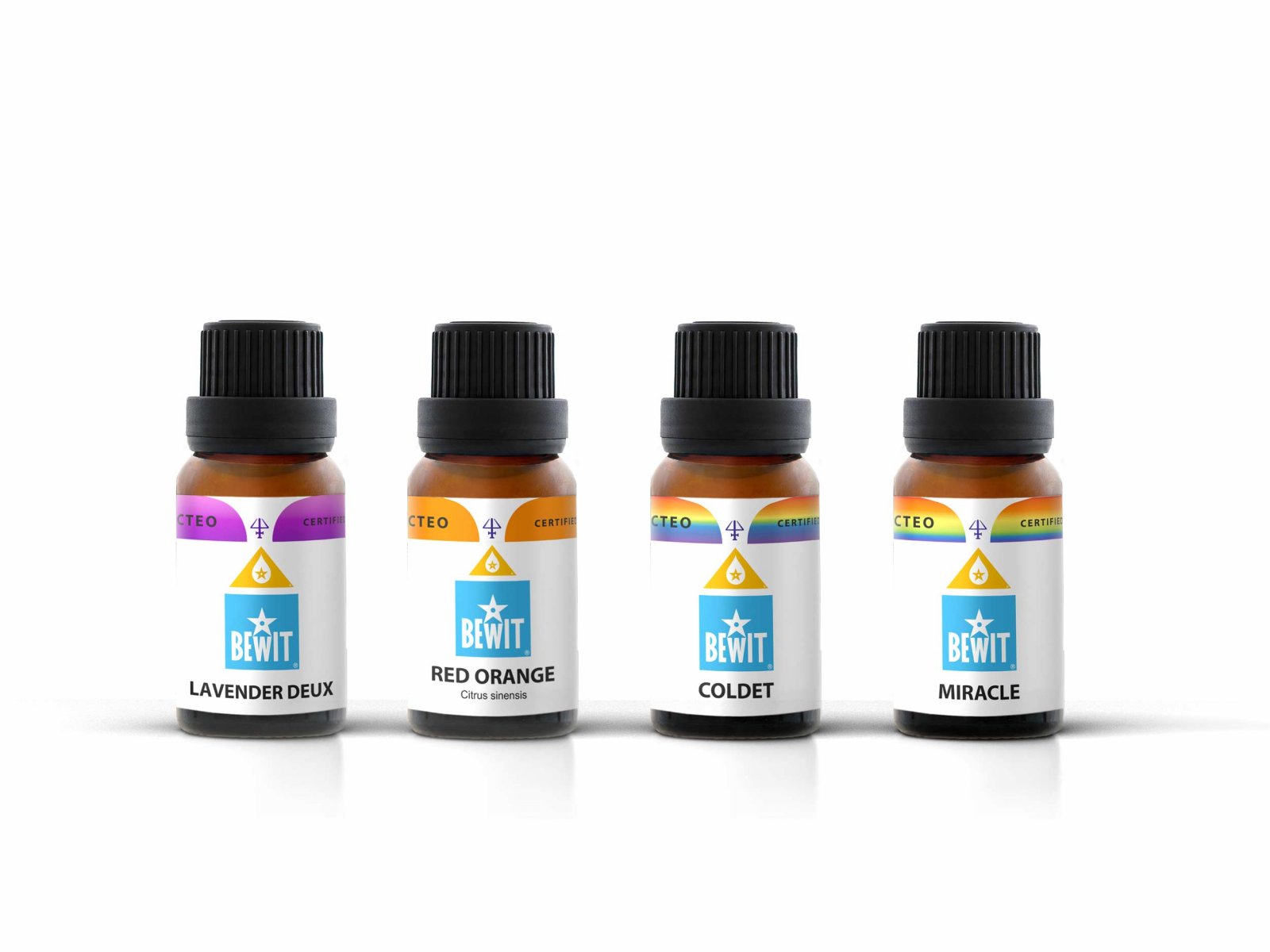
CTEO® (Certified Therapeutic Essential Oils) is BEWIT's proprietary quality program — not an independent industry certification. That said, it represents a commitment to testing that goes beyond basic purity requirements.
Every batch undergoes comprehensive laboratory analysis in BEWIT's Ostrava facility, including GC/MS testing and their proprietary "3D analysis" approach. Detailed lab reports (COAs) are accessible per batch, allowing you to verify what you're buying.
What to Look for in Lab Reports
Don't just check that a COA exists — look at the actual data: chemical composition, purity percentage, and absence of adulterants. This is the real indicator of quality, regardless of what "grade" label a company uses.
Popular Essential Oils and Their Uses
Lavender (Lavandula angustifolia)
The most versatile essential oil, lavender is known for its calming properties. Use it for relaxation, sleep support, and skin care. It's also one of the gentlest oils, making it suitable for beginners.
Peppermint (Mentha piperita)
Energizing and refreshing, peppermint is excellent for mental clarity and focus. It's also commonly used for digestive comfort and cooling relief.
Tea Tree (Melaleuca alternifolia)
Known for its purifying properties, tea tree is a staple for skin care and household cleaning. It has natural antibacterial and antifungal properties.
Eucalyptus (Eucalyptus globulus)
With its distinctive fresh, clean scent, eucalyptus is popular for respiratory support and clearing the air. It's often used during cold season.
Frankincense (Boswellia carterii)
Revered for thousands of years, frankincense is used for meditation, skin rejuvenation, and overall wellness. It has a warm, woody aroma.

Methods of Use
Diffusion
Using an ultrasonic or nebulizing diffuser is the most popular way to enjoy essential oils. Add 3-5 drops to your diffuser and run for 30-60 minutes at a time. This fills your space with therapeutic aroma.
Topical Application
Mix essential oils with a carrier oil (like jojoba, sweet almond, or coconut oil) before applying to skin. Popular application areas include wrists, temples, back of neck, and soles of feet.
Bath
Add 5-10 drops of essential oil mixed with a dispersant (like bath salts or milk) to your bath water. Never add oils directly to water as they will float on top and may cause skin irritation.
Compress
Add a few drops to warm or cool water, soak a cloth, and apply to the desired area. This is helpful for muscle tension or minor injuries.
Building Your Essential Oil Collection
Starter Kit Recommendations
If you're just beginning, start with these versatile oils:
- Lavender - For relaxation and skin care
- Peppermint - For energy and digestive support
- Tea Tree - For purification and skin care
- Lemon - For uplifting mood and cleaning
- Eucalyptus - For respiratory support
BEWIT offers a starter kit collection that includes these foundational oils at a discounted price.
Storage Tips
- Store in dark glass bottles (amber or cobalt blue)
- Keep in a cool, dark place away from sunlight
- Ensure caps are tightly closed
- Most oils last 1-3 years if stored properly
- Citrus oils have shorter shelf life (6-12 months)
Quality vs. Price: Understanding the Difference
You might wonder why some essential oils cost significantly more than others. The price reflects several factors:
- Plant rarity - Rose requires 60,000 roses for 1 oz of oil
- Extraction difficulty - Some plants yield very little oil
- Sourcing practices - Ethical, sustainable sourcing costs more
- Testing standards - Comprehensive lab testing adds cost
- No MLM overhead - Companies like BEWIT can offer better value
Cheap oils are often diluted, synthetic, or adulterated. While they might smell similar, they won't provide the same therapeutic benefits and may even cause adverse reactions.
Getting Started Today
Ready to begin your essential oil journey? Here's a simple plan:
- Start with 2-3 versatile oils like lavender and peppermint
- Get a quality diffuser for easy, safe use
- Purchase a carrier oil for topical applications
- Read labels carefully and follow safety guidelines
- Keep a journal to track what works for you
Remember, quality matters. Choosing CTEO-certified oils from BEWIT ensures you're getting pure, potent essential oils that deliver real results.
Ready to Explore?
Browse our complete product collection to find the perfect essential oils for your needs. Subscribe to our newsletter for an exclusive discount code.
Essential oils are highly concentrated plant extracts. Follow label instructions, keep them away from children and consult a professional if you are pregnant, nursing or under medical care. Safe Use Guide →
Products mentioned in this guide


Discover Premium Essential Oils
Experience the difference of CTEO-certified, European-quality essential oils.
Browse Products


Be the first to comment