
This guide contains affiliate links to BEWIT.love. If you buy through them, we may earn a commission at no extra cost to you. This never affects what we write.
In this guide
A cluttered mind makes for slow work. While no essential oil can do the thinking for you, the right scent can help you build a focused atmosphere, mark the start of a deep-work session, and make long study blocks more pleasant. This guide covers the six oils most commonly used at the desk, plus four practical routines you can start using today.
How Scent Relates to Attention: An Honest Look
Let's be upfront: essential oils are not a productivity hack in themselves. What they offer is subtler and, used well, genuinely useful. Scent works largely through association and context. When you consistently pair one aroma with one activity — rosemary with deep work, for example — the scent becomes a cue. Your brain learns that this smell means "we work now," the same way a gym playlist tells your body it's time to train.
There is also a simple environmental effect. A fresh, stimulating scent makes a workspace feel more awake than stale air, and people commonly report that oils like peppermint and lemon help them feel alert while studying. That's not the same as a measurable boost to intelligence — but a workspace you enjoy sitting in is a workspace you'll stay in longer. That alone is worth a diffuser on your desk.

The Six Best Essential Oils for Focus
Rosemary
The classic study oil. Herbaceous and camphoraceous, rosemary has been linked with memory since ancient Greek students wore sprigs of it while studying. It's the most popular choice for reading-heavy sessions and exam preparation. Read our full rosemary oil guide for sourcing and blending details, or go straight to BEWIT rosemary essential oil.
Peppermint
Cool, sharp, and instantly refreshing — peppermint is the go-to for the afternoon slump. Even one drop on a tissue is noticeable. It's strong, so use fewer drops than you would with other oils. Our peppermint oil guide covers dilution and safety in depth.
Lemon
Bright, clean, and universally liked, lemon is the safest choice for shared spaces. It lifts a room without dominating it and blends well with nearly everything. BEWIT lemon essential oil is cold-pressed from the peel, which preserves the fresh top notes.
Basil (Sweet Basil)
Green and slightly spicy, basil is a lesser-known desk companion often chosen for mentally repetitive tasks — data entry, editing, proofreading. It pairs beautifully with lemon in a 1:2 ratio (1 drop basil, 2 drops lemon).
Frankincense
Resinous, warm, and grounding. Where peppermint sharpens, frankincense settles. Choose it for writing, planning, and any work that needs calm, sustained attention rather than a burst of energy.
Vetiver
A deep, earthy root oil traditionally used for grounding. Vetiver is thick and intense — one drop in a blend is usually enough. It's popular with people whose main enemy is restlessness: it anchors a blend the way a bass line anchors a song.
Four Work-Session Recipes
1. The Pomodoro Diffusing Schedule
The pomodoro technique (25 minutes of work, 5 minutes of rest) pairs naturally with intermittent diffusing — which is also how aromatherapists recommend using a diffuser anyway, since your nose stops registering a constant scent after 15–20 minutes.
- Minute 0: Start your 25-minute work block and switch the diffuser on (4 drops rosemary + 2 drops lemon in a 100 ml diffuser).
- Minute 25: Break begins — diffuser off, window open, stand up.
- Minute 30: New block, diffuser back on.
- After 4 blocks (about 2 hours), take a 20–30 minute break and let the room air out completely.
The on/off rhythm keeps the scent noticeable and turns the aroma itself into a start-work signal.
2. The Study-Association Technique for Exams
This is the most interesting trick in the focus toolbox. Pick one oil you don't use anywhere else — rosemary is traditional — and diffuse it only while studying a specific subject. Then, before the exam, smell the same oil from a personal inhaler or a drop on a tissue. Many students find that re-encountering the study scent helps the material feel familiar and calms pre-exam nerves. Two rules: start at least 2 weeks before the exam, and keep the oil exclusive to that subject so the association stays clean.
3. Desk Roll-On (2% Dilution)
A 10 ml roll-on bottle lives in a pencil case and never bothers colleagues. A 2% dilution means 6 drops of essential oil per 10 ml of carrier oil (jojoba or fractionated coconut work well):
- 3 drops rosemary
- 2 drops lemon
- 1 drop peppermint
- 10 ml carrier oil
Roll onto wrists or the back of the neck at the start of each work block. Do a patch test before first use, and note that lemon is mildly photosensitizing — keep freshly applied skin out of direct summer sun for 12 hours.
4. Afternoon-Slump Inhaler Stick
A personal aromatherapy inhaler (a small plastic tube with a cotton wick, about €2–3) is the most office-friendly format there is — zero scent escapes to your neighbours. Load the wick with:
- 8 drops peppermint
- 5 drops lemon
- 2 drops basil
When the 2 p.m. fog rolls in, take 3–4 slow breaths through the inhaler, drink a glass of water, and stand for two minutes. The wick lasts about 3 months before it needs refreshing.
Quick Reference: Which Blend for Which Task
| Goal | Oil Combo | Method | Duration |
|---|---|---|---|
| Deep work / writing | 3 drops frankincense + 2 drops lemon | Diffuser, on during work blocks only | 25 min on / 5 min off |
| Exam preparation | 4 drops rosemary | Diffuser while studying; inhaler before the exam | 45–60 min sessions |
| Afternoon slump | 8 : 5 : 2 peppermint / lemon / basil | Personal inhaler stick | 3–4 breaths, as needed |
| Restlessness / grounding | 1 drop vetiver + 3 drops frankincense | Diffuser or roll-on on wrists | 30 min |
| Shared office | 6 drops rosemary + lemon in 10 ml carrier | 2% roll-on, wrists only | Reapply per work block |
One Scent, One Task
The association effect works best when it's specific. Resist the urge to use your "deep work" blend for relaxing in the evening — you'd be teaching your brain two contradictory meanings for the same cue.
What NOT to Expect
A little honesty protects you from disappointment — and from marketing that overpromises:
- Oils won't replace sleep. No blend compensates for a 5-hour night. Fix the sleep first; use oils as a finishing touch.
- Oils won't remove distractions. A phone on the desk beats rosemary every time. Scent supports a focused environment; it doesn't create discipline.
- Effects are subtle. Expect "the room feels fresher and starting work feels easier," not a dramatic mental shift.
- They are not treatments. Essential oils are not a therapy for attention difficulties or any medical condition. If focus problems significantly affect your life, talk to a healthcare professional.

Workspace Tips: Ventilation and Office Etiquette
A few practical points that make desk aromatherapy work in the real world:
- Ventilate between sessions. Open a window for 5 minutes every 1–2 hours. Fresh oxygen does more for alertness than any oil, and it resets your nose.
- Less is more. In a home office of 12–15 m², 4–6 drops total per diffuser fill is plenty. If you can taste the scent, you've used too much.
- Shared offices: ask first. Colleagues may have allergies, sensitivities, or simply different taste. In shared spaces, default to a personal inhaler or roll-on rather than a diffuser.
- Mind pets and small children. Diffuse in ventilated rooms they can leave freely, and be especially cautious with cats.
- Keep oils off electronics. Undiluted essential oils can mar plastics and keyboard coatings — keep bottles capped and away from your laptop.
Peppermint Near the Eyes
Never rub your eyes after handling peppermint oil, and keep roll-ons below the neckline of your face. Even the vapour can sting if applied too close. If contact happens, wipe with a carrier oil (not water) and rinse afterwards.
Building Your Focus Kit
You don't need a shelf full of bottles. A practical starter kit is three oils: rosemary for study sessions, peppermint for the slump, and lemon to brighten and blend. Add frankincense or vetiver later if grounding turns out to be your bigger need. All of them are available in BEWIT's CTEO®-tested range.
Frequently Asked Questions
Which single oil should I start with for focus?
Rosemary. It's the most traditional choice for study and desk work, it's affordable, and it's distinctive enough to build a strong scent-work association. If you find it too herbal, lemon is the friendliest alternative.
How long should I run the diffuser while working?
Intermittently — about 25–30 minutes on, then a break with the diffuser off. Your nose adapts to constant scent within 15–20 minutes anyway, so continuous diffusing wastes oil and can lead to headaches in poorly ventilated rooms.
Can essential oils help with ADHD or diagnosed attention problems?
Essential oils are not a treatment for ADHD or any medical condition, and nothing in this guide should replace professional care. They can be a pleasant part of a workspace routine, nothing more. For diagnosed attention difficulties, work with a qualified healthcare provider.
Is it okay to diffuse focus oils all day in a home office?
It's better not to. Follow the on/off rhythm, ventilate every couple of hours, and give yourself scent-free afternoons now and then. Constant exposure blunts the association effect that makes desk aromatherapy useful in the first place.
What's the cheapest way to try this before buying a diffuser?
A tissue. Put 1–2 drops of rosemary or peppermint on a paper tissue and set it next to your keyboard at the start of a work block. It costs nothing extra, lasts about 30 minutes, and tells you quickly whether desk aromatherapy suits you.
Products mentioned in this guide


Discover Premium Essential Oils
Experience the difference of CTEO-certified, European-quality essential oils.
Browse Products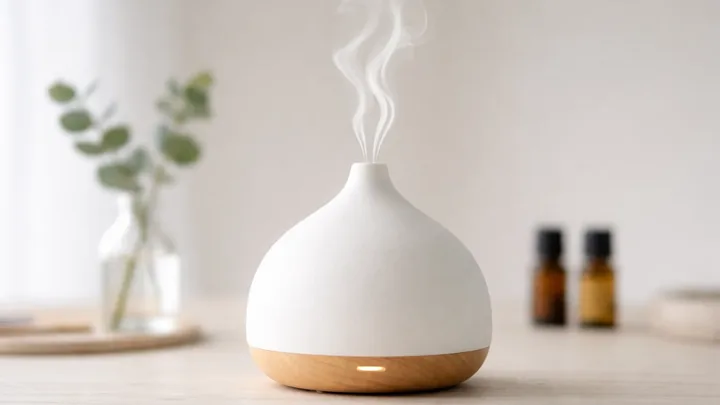


Be the first to comment