
This guide contains affiliate links to BEWIT.love. If you buy through them, we may earn a commission at no extra cost to you. This never affects what we write.
In this guide
Walk into the world of essential oils and you'll find hundreds of bottles competing for your attention. The good news: you only need a handful to cover 90% of everyday uses. This guide walks you through the 10 best essential oils for beginners, what each one actually does, and — just as importantly — which oils to skip until you have more experience.
Why Starting Small Beats Buying a Huge Kit
The most common beginner mistake is overbuying. A 25-bottle "starter" collection sounds like a bargain, but most people end up using 4-5 oils regularly while the rest oxidise on a shelf. Essential oils are concentrated plant extracts — a single 10 ml bottle contains roughly 200 drops, and typical uses call for just 3-5 drops at a time. One bottle of lavender, used several times a week, can easily last six months.
A smarter approach: pick 3-5 versatile oils, learn them well, and expand only when you find a real gap. If you want the full theory behind extraction methods, grades, and terminology first, read our complete guide to essential oils — then come back here for the shopping shortlist.

The 10 Best Essential Oils for Beginners
Each oil below earns its place by being versatile, forgiving to use, and widely useful in a normal household. For every oil you'll find what it's traditionally used for plus one concrete way to try it this week.
1. Lavender (Lavandula angustifolia)
If you buy only one oil, make it lavender. It may support relaxation and restful sleep, is one of the gentlest oils for skin use, and blends with almost everything. Try this: diffuse 4 drops for 30-45 minutes before bedtime. See the BEWIT true lavender profile for sourcing details.
2. Tea Tree (Melaleuca alternifolia)
The household workhorse, traditionally used for skin blemishes and natural cleaning. Try this: add 10 drops to 250 ml of water with a splash of white vinegar for a simple surface spray. More on the BEWIT tea tree oil profile.
3. Lemon (Citrus limon)
Bright, uplifting, and excellent in the diffuser during mentally heavy days. Cold-pressed from the peel, so it is affordable and fresh-smelling. Try this: diffuse 3 drops of lemon with 2 drops of lavender mid-afternoon when energy dips.
4. Sweet Orange (Citrus sinensis)
The friendliest scent in aromatherapy — warm, sweet, and loved by children and guests alike. Often one of the least expensive oils, which makes it perfect for experimenting. Try this: 5 drops in the diffuser 20 minutes before visitors arrive.
5. Eucalyptus (Eucalyptus globulus)
The classic "clear breathing" aroma, traditionally used during the cold season. Try this: place 2 drops on the shower floor (away from the water stream) and let the steam carry the scent. Avoid using around children under 6.
6. Peppermint (Mentha piperita)
Intensely cooling and awakening. May support focus and a comfortable head and neck when tension builds. Try this: mix 1 drop into a teaspoon of carrier oil and massage into the back of your neck during long work sessions. Start with less than you think — peppermint is strong.
7. Rosemary (Rosmarinus officinalis)
Traditionally paired with study and memory work; a 2003 aroma study famously linked rosemary scent with improved recall speed. Try this: diffuse 3 drops while reading or preparing for an exam.
8. Frankincense (Boswellia carterii)
The most "premium" pick on this list — a deep, resinous aroma traditionally used in meditation and skincare routines for mature skin. Try this: 2 drops in the diffuser during 10 minutes of quiet breathing in the morning.
9. Bergamot (Citrus bergamia)
The scent behind Earl Grey tea: citrus with a floral, sophisticated edge. Widely used in the diffuser to soften a stressful mood. Try this: blend 3 drops of bergamot with 2 drops of frankincense for an elegant evening atmosphere.
10. One Ready-Made Blend
A professionally composed blend (relaxation, breathing, or festive) teaches you how finished aromas are built and gives instant results with zero blending skill. Alternatively, a curated set such as the BEWIT basic essential oils set covers several of the singles above in one box — usually cheaper than buying them separately.
Citrus Oils and Sunlight
Lemon and bergamot (and most cold-pressed citrus oils) are photosensitising — applied to skin before sun exposure they can cause burns, so keep them in the diffuser or use them on covered skin only; the full list is in our guide to photosensitive essential oils.
Beginner Comparison Table
| Oil | Best For | Beginner Difficulty | Watch-Outs |
|---|---|---|---|
| Lavender | Sleep, relaxation, skin | Very easy | Verify Lavandula angustifolia, not lavandin |
| Tea Tree | Blemishes, cleaning | Very easy | Medicinal scent; toxic to pets if ingested |
| Lemon | Mood, fresh air | Easy | Photosensitising; oxidises within ~1 year |
| Sweet Orange | Cosy atmosphere | Very easy | Short shelf life once opened (6-12 months) |
| Eucalyptus | Clear breathing | Easy | Not for children under 6 |
| Peppermint | Focus, cooling | Moderate | Very strong — max 1% dilution on skin |
| Rosemary | Concentration | Easy | Avoid during pregnancy |
| Frankincense | Meditation, skincare | Easy | Higher price per ml |
| Bergamot | Stress, evening calm | Easy | Strongly photosensitising on skin |
| Ready-made blend | Instant results | Very easy | Check the ingredient list for citrus content |
What NOT to Buy First
Some oils are wonderful — later. As a beginner, skip these for now:
- Expensive florals (rose, neroli, jasmine): often over €50 for a tiny bottle, and their character is easier to appreciate once your nose is trained.
- "Hot" oils (oregano, cinnamon bark, clove): powerful skin irritants that demand careful dilution knowledge.
- Wintergreen and birch: high in methyl salicylate and simply not beginner-safe.
- Giant multi-bottle kits from unknown brands: suspiciously cheap kits almost always mean diluted or synthetic contents.
Before any skin application of the oils you do buy, learn the dilution basics — our essential oil dilution guide covers the exact drop-per-teaspoon ratios for every situation.

How to Store Your First Oils
Proper storage doubles the useful life of your collection:
- Keep bottles in dark glass, tightly closed, away from direct sunlight.
- Store below 25 °C — a cupboard or drawer is ideal; citrus oils even benefit from the fridge.
- Write the opening date on the label. Citrus oils are best used within 6-12 months of opening; most others last 2-3 years.
- Keep everything out of reach of children and pets — child-proof caps help but are not a substitute for high shelves.
How to Verify Quality Before You Pay
A quality essential oil label always states the Latin botanical name, country of origin, extraction method, and batch number. The gold standard of verification is GC-MS analysis (gas chromatography-mass spectrometry), which maps the oil's exact chemical fingerprint and exposes synthetic additives. BEWIT tests every batch under its CTEO quality programme and makes the results available — you can read exactly how the testing and sourcing works on our quality and trust page.
Quick Label Check
No Latin name, no batch number, or the phrase "fragrance oil" anywhere on the label? Put it back. A genuine 10 ml lavender cannot cost the same as a bus ticket — steam-distilling 1 kg of oil takes roughly 100-150 kg of lavender flowers.
Your Sensible First Order
A realistic starter shortlist: lavender, tea tree, and one citrus (sweet orange or lemon) cover sleep, cleaning, and mood — the three things beginners actually use oils for. Add peppermint or eucalyptus in month two, and frankincense or a blend when you know your preferences. Three to five bottles, not twenty-five.
Browse the BEWIT Essential Oils Catalog
Frequently Asked Questions
How many essential oils do I really need to start?
Three is enough: lavender, tea tree, and one citrus oil cover relaxation, household use, and mood support. Most people never regularly use more than 5-7 oils, so expand slowly based on what you actually reach for.
How long does a 10 ml bottle last?
A 10 ml bottle holds roughly 200 drops. Diffusing 4 drops three times a week uses about 50 drops a month, so a single bottle lasts around four months of steady use — longer for oils you use occasionally.
Can I apply essential oils directly to my skin?
No — always dilute in a carrier oil first, typically 1-2% for adults (about 2-3 drops per teaspoon of carrier). Undiluted application can cause irritation or sensitisation even with gentle oils like lavender.
Is a cheap 20-bottle kit a good deal?
Almost never. Producing genuine essential oils is expensive — if a kit prices each bottle at pocket change, the contents are likely diluted, synthetic, or oxidised. Fewer bottles from a producer that publishes GC-MS testing is the better investment.
Which oil is safest around children?
Lavender and sweet orange are generally considered the most forgiving for diffusing in family spaces. Avoid eucalyptus and peppermint around children under 6, always diffuse in ventilated rooms, and keep all bottles locked away.
Essential oils are highly concentrated plant extracts. Follow label instructions, keep them away from children and consult a professional if you are pregnant, nursing or under medical care. Safe Use Guide →
Products mentioned in this guide
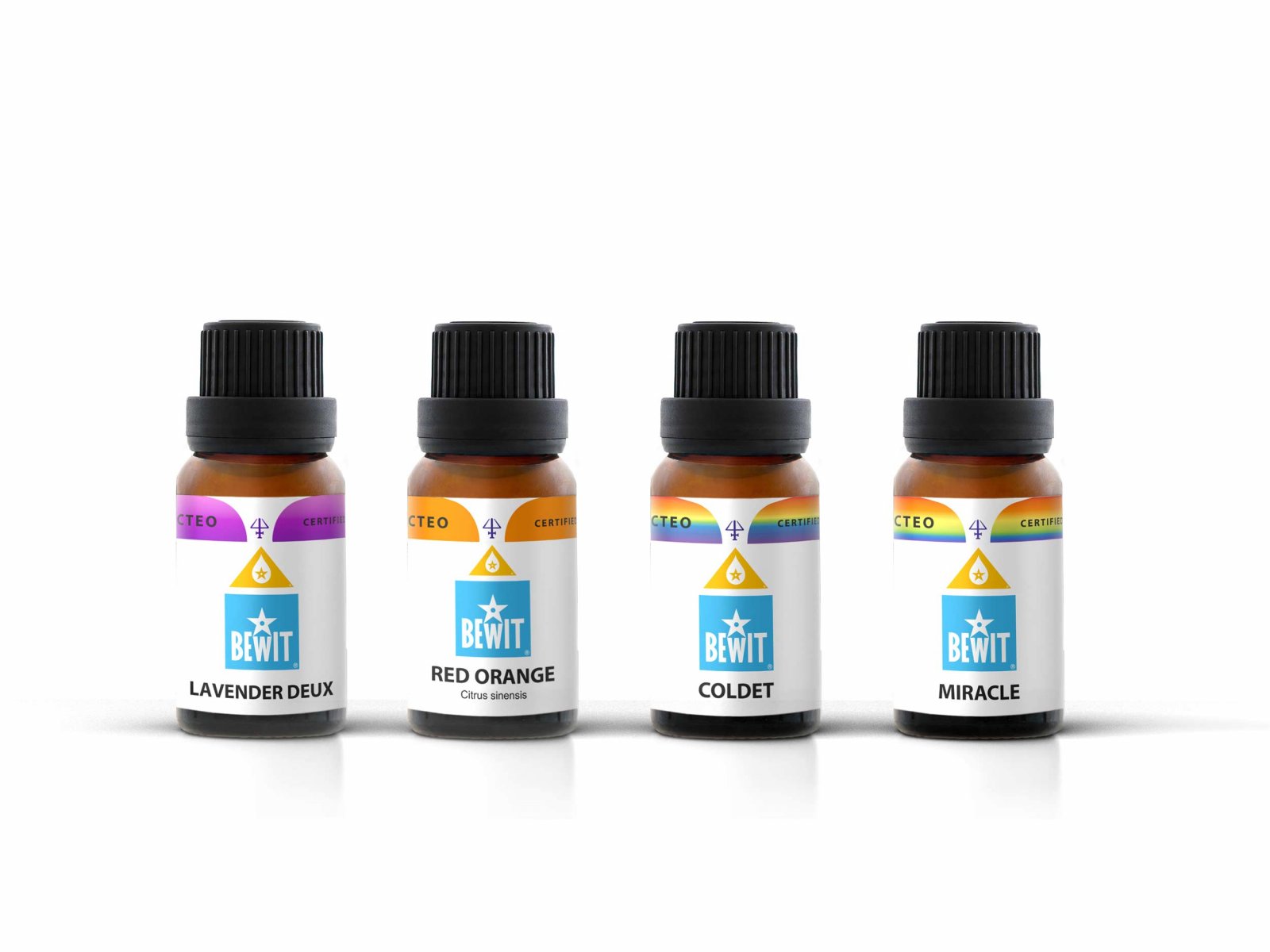


Discover Premium Essential Oils
Experience the difference of CTEO-certified, European-quality essential oils.
Browse Products
Be the first to comment