
This guide contains affiliate links to BEWIT.love. If you buy through them, we may earn a commission at no extra cost to you. This never affects what we write.
In this guide
If essential oils had personalities, sweet orange would be the one everyone wants at their party. Cold-pressed from the peel of Citrus sinensis, it is bright, affordable, and endlessly useful — from morning diffuser blends to homemade degreasers. Here is how to get the most out of the happiest bottle in your collection, and the one safety rule every citrus lover must know.

From Peel to Bottle: Where Sweet Orange Oil Comes From
Unlike lavender or eucalyptus, sweet orange essential oil is not distilled — it is cold-pressed directly from the rind of Citrus sinensis. The peels of roughly 30-50 oranges yield a single 15 ml bottle, which is why orange remains one of the most affordable essential oils on the market, typically costing a third of the price of lavender.
The star of its chemistry is limonene, which makes up 85-96% of the oil. Limonene is what gives orange peel its instantly recognizable zesty scent, and it is also a genuinely effective natural solvent — the reason orange oil shows up in commercial degreasers and adhesive removers. That single molecule explains both why this oil is so useful around the house and why it needs a little extra care in storage (more on that below).
The Aroma: Sunshine in Scent Form
Sweet orange smells exactly like what it is: freshly zested orange peel. The aroma is sweet, juicy, and slightly candy-like, without the sharpness of lemon or the bitterness of grapefruit. It is a top note, which means it hits your nose first in any blend and evaporates fastest — usually within 1-2 hours of diffusion.
Because the scent is so familiar and universally liked, orange is one of the few essential oils that almost nobody objects to. It may lift the mood of a room in a way few other single oils can, which makes it a safe choice for shared spaces, waiting rooms, and family kitchens.
Everyday Uses for Sweet Orange Oil
Morning Kitchen Diffusion
Add 4-6 drops to a diffuser in the kitchen while making breakfast. Orange pairs naturally with the smell of coffee and toast, and a 30-minute morning session is enough to scent an average kitchen. For a brighter start, try 3 drops orange + 2 drops peppermint.
Kids' Rooms — Gently
Sweet orange is one of the more family-friendly oils, but children's airways deserve extra caution. For a child's room, use half the usual amount — 2-3 drops in a diffuser — run it for 15-20 minutes before the child enters the room rather than while they are in it, and always keep the door or a window ajar for ventilation. Never diffuse continuously overnight, and keep bottles well out of reach: the sweet smell makes citrus oils tempting to small hands.
Natural Home Cleaning
This is where orange oil earns its keep. Limonene cuts through grease that plain vinegar struggles with. Two proven recipes:
- All-purpose citrus spray: 250 ml water + 250 ml white vinegar + 20 drops sweet orange in a 500 ml spray bottle. Shake before each use. Great for counters, tiles, and sinks.
- Heavy-duty degreaser: 100 ml water + 100 ml vinegar + 1 teaspoon liquid castile soap + 15 drops orange in a 250 ml bottle. Spray on stovetops and range hoods, wait 2 minutes, wipe.
Avoid using vinegar-based sprays on natural stone (marble, granite). For a full set of room-by-room recipes, see our guide to natural home cleaning with essential oils.
Festive Winter Blends
Orange + cinnamon + clove is the classic mulled-wine trio, and for good reason. Diffuse 4 drops orange + 2 drops cinnamon + 1 drop clove for an instant December atmosphere — it works just as well in July when you miss it. Keep spice oils to these low ratios; cinnamon and clove are potent and can irritate airways in higher amounts.
Linen Spray
Combine 90 ml distilled water + 30 ml vodka or witch hazel + 25 drops sweet orange in a 120 ml fine-mist bottle. Shake well and lightly mist sheets, towels, and curtains from about 30 cm away. The alcohol helps the oil disperse and speeds drying. Test on a hidden corner of delicate or pale fabrics first.
DIY Room Spray
For an instant refresh without a diffuser: 80 ml water + 20 ml vodka + 30 drops orange + 10 drops of a complementary oil (lavender for evenings, peppermint for mornings) in a 100 ml spray bottle. Two or three sprays freshen a room; it also works well in cars and entryways.
Orange Blends for Every Mood
| Mood | Diffuser Recipe (per 100 ml water) | Best Time |
|---|---|---|
| Bright morning start | 3 drops orange + 2 drops peppermint | Breakfast, before work |
| Calm evening | 3 drops orange + 3 drops lavender | 1-2 hours before bed |
| Festive warmth | 4 drops orange + 2 drops cinnamon + 1 drop clove | Winter afternoons, guests |
| Fresh and clean | 3 drops orange + 2 drops lemon + 1 drop tea tree | After cleaning, airing out |
| Cozy focus | 3 drops orange + 2 drops frankincense | Reading, desk work |
Blending Tip
Orange is a top note and fades first. If your blend loses its citrus sparkle after an hour, add 1-2 extra drops of orange rather than restarting the whole diffuser.

Photosensitivity: The One Rule You Must Not Skip
Here is the important part. Cold-pressed citrus oils can react with UV light on the skin. With sweet orange the culprit is less the fresh oil — which is considered one of the milder citrus oils — and more what happens as it ages: limonene oxidizes on contact with air, and oxidized limonene is a known skin sensitizer that raises the risk of irritation and sun-related skin reactions.
The practical rules are simple. Diffusing orange oil carries no sun risk at all — photosensitivity only concerns oil applied to skin. If you do use it topically, dilute to 1% or less (about 3 drops per 15 ml of carrier oil), avoid applying it to skin that will see direct sunlight within the next 12 hours, and never use an orange oil that smells flat, sour, or "off" on skin — that is the smell of oxidation.
Sun Safety with Citrus Oils
After applying any cold-pressed citrus oil to skin, wait 12 hours before sun exposure or cover the area with clothing. Old, oxidized orange oil is riskier than fresh oil — when in doubt, keep aging bottles for cleaning recipes and off your skin. See our full guide to photosensitive essential oils for which citrus oils are strict and which are forgiving.
Shelf Life: Why Citrus Oils Age Fast
Most essential oils last 3-6 years. Citrus oils do not. Because limonene oxidizes readily, sweet orange oil is at its best for about 12 months after opening. Three habits stretch that window as far as it can go:
- Refrigerate it. Storing citrus oils in the fridge (around 4 °C) meaningfully slows oxidation. Let the bottle warm up for a few minutes before use.
- Minimize air contact. Close the cap immediately after use, and consider transferring the remainder of a half-empty bottle into a smaller one — less air in the bottle means slower oxidation.
- Buy small, date the bottle. A 15 ml bottle you finish in a year beats a 50 ml bottle that goes stale. Write the opening date on the label.
An orange oil past its prime is not wasted — it is still excellent in the cleaning recipes above. Just retire it from skin use and diffusion.
Choosing a Quality Orange Oil
Look for the botanical name Citrus sinensis, the extraction method (cold-pressed), the country of origin, and a dark glass bottle. BEWIT's sweet orange essential oil is cold-pressed Citrus sinensis tested under the CTEO® quality program with GC/MS analysis per batch — you can check exactly how much limonene is in your bottle.
Curious how orange compares to the rest of the citrus family and beyond? Browse the full range in our essential oils catalog.
Frequently Asked Questions
Is sweet orange oil safe to diffuse around children?
Yes, with sensible precautions: use 2-3 drops instead of the usual 4-6, diffuse before the child enters the room rather than continuously, keep the space ventilated, and store bottles out of reach. For babies under 6 months, skip diffusion in their room entirely.
Does diffusing orange oil cause photosensitivity?
No. Photosensitivity concerns only apply to oil on skin exposed to UV light. You can diffuse orange oil and then sunbathe without any worry. The 12-hour sun rule applies to topical use only.
How can I tell if my orange oil has gone off?
Trust your nose. Fresh orange oil smells sweet and juicy; oxidized oil smells flat, sour, or faintly like turpentine. Cloudiness or a thicker, sticky texture are also signs. Oxidized oil should not go on skin but still works in cleaning sprays.
What is the difference between sweet orange and bitter orange oil?
Sweet orange comes from Citrus sinensis and is mild, sweet, and only weakly photosensitizing. Bitter orange (Citrus aurantium) is sharper in scent and significantly more phototoxic on skin. Check the Latin name on the label — recipes in this guide assume Citrus sinensis.
Why is orange oil so much cheaper than other essential oils?
Cold-pressing peel is far less labor- and material-intensive than steam distillation, and orange peel is an abundant by-product of the juice industry. Low price here does not signal low quality — but the botanical name, extraction method, and batch testing still matter.
Citrus oils such as bergamot, lemon and orange can make skin sensitive to sunlight. Avoid sun exposure for 12–24 hours after applying them to skin. Safe Use Guide →
Products mentioned in this guide
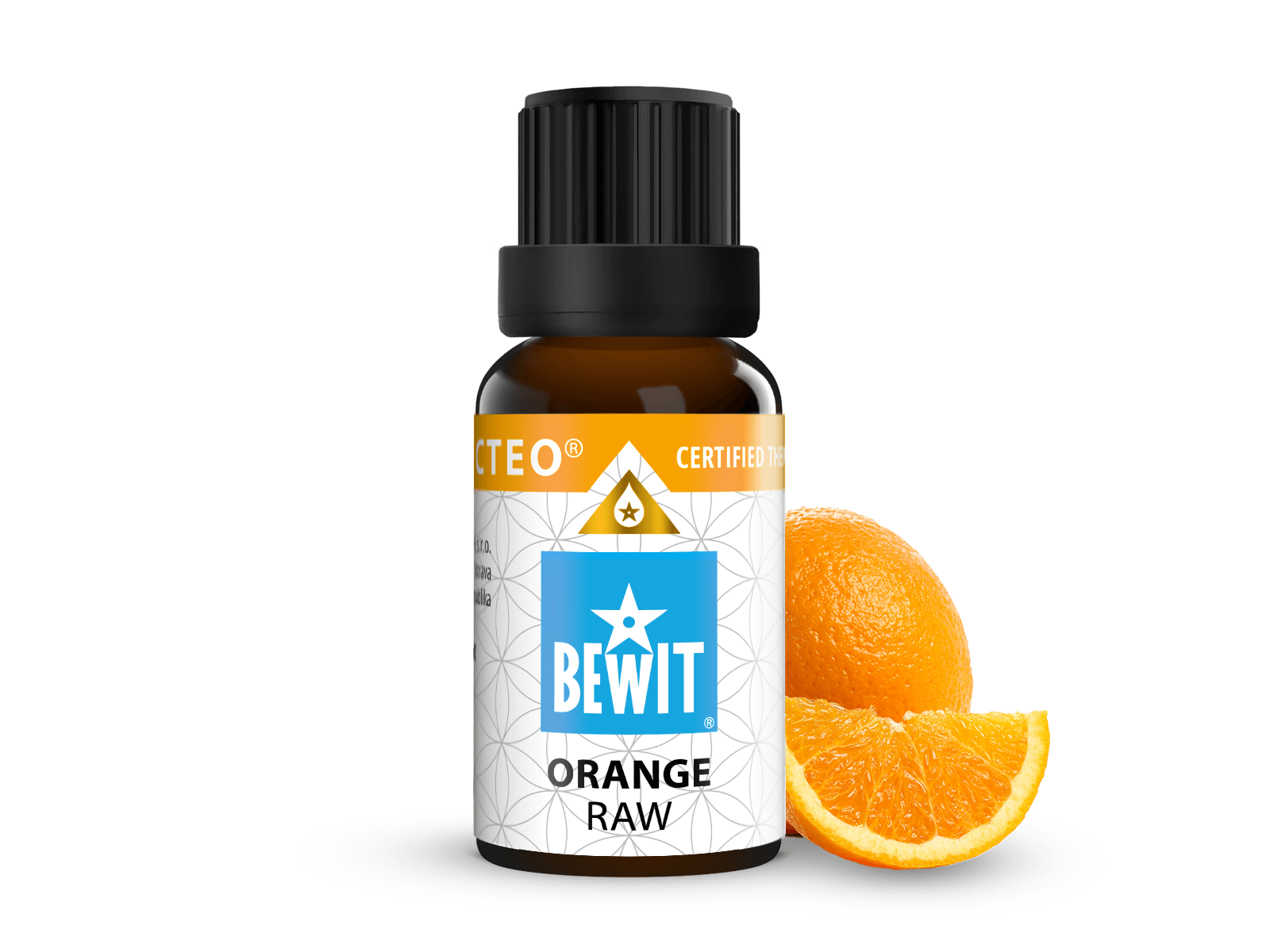

Discover Premium Essential Oils
Experience the difference of CTEO-certified, European-quality essential oils.
Browse Products


Be the first to comment